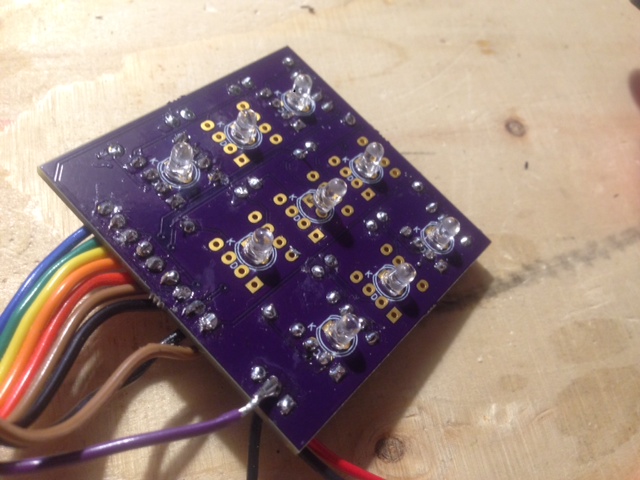
It’s 3am what better time to fiddle around with photodiodes! I received the photodiode array boards today and decided to have a quick play around. With a 10M feedback resistor they’re only outputting about a volt, this will work but the OpAmps have 12v rails so I might change the feedback resistor at some point. Too quickly test the board I soldered 4 of the Opamps in and wired the output directly to some LEDs, later I’ll look at acquisition options, including the 8 channel ADC board I’ve made. For a demo and some rambling see the video below:
Forrest Mims is somewhat famous for using LEDs as light sensors. I wanted to try this myself:
It seems to work reasonably well with a transimpedance amplifier and a 100M feedback resistor. I was using the LED from a torch (as it was the only clear LED I had to hand). The response time was surprisingly slow. I kind of wonder if the torch LED module has a decoupling cap in it (and also a current limiting resistor) so I’ll try this experiment again when I have some proper LEDs…
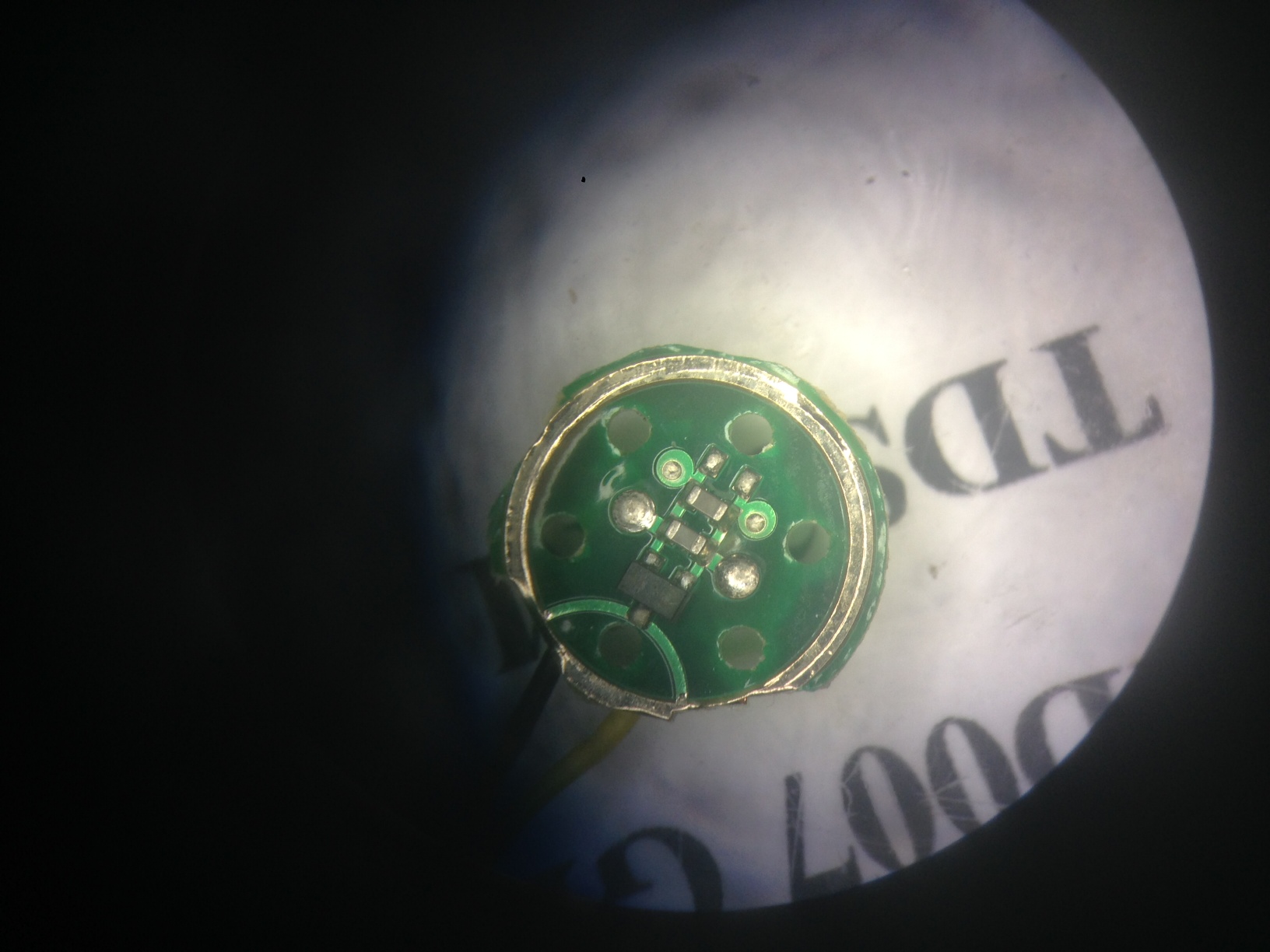
Today I was playing with an Electret mic, salvaged from a bluetooth handsfree kit. I’ve not used a Electret mic before so it’s operation/preamp was of interest to me. It seems that most of these mics now include a single JFET common source amplifer in the mic can itself. As such they just need a single resistor and some biasing and they’re ready to go. The pic above shows the Mic internals.
In the video below I play with the Mic a bit and run a tone generator against the mic and show an FFT on my scope. A fun 5 minute project if nothing else…
My name is Nava Whiteford. I’ve worked for a few sequencing companies. I have equity in a few sequencing companies based on my previous employment (I try to be unbiased in my posts). You can contact me at: [email protected]
 RSS
RSS