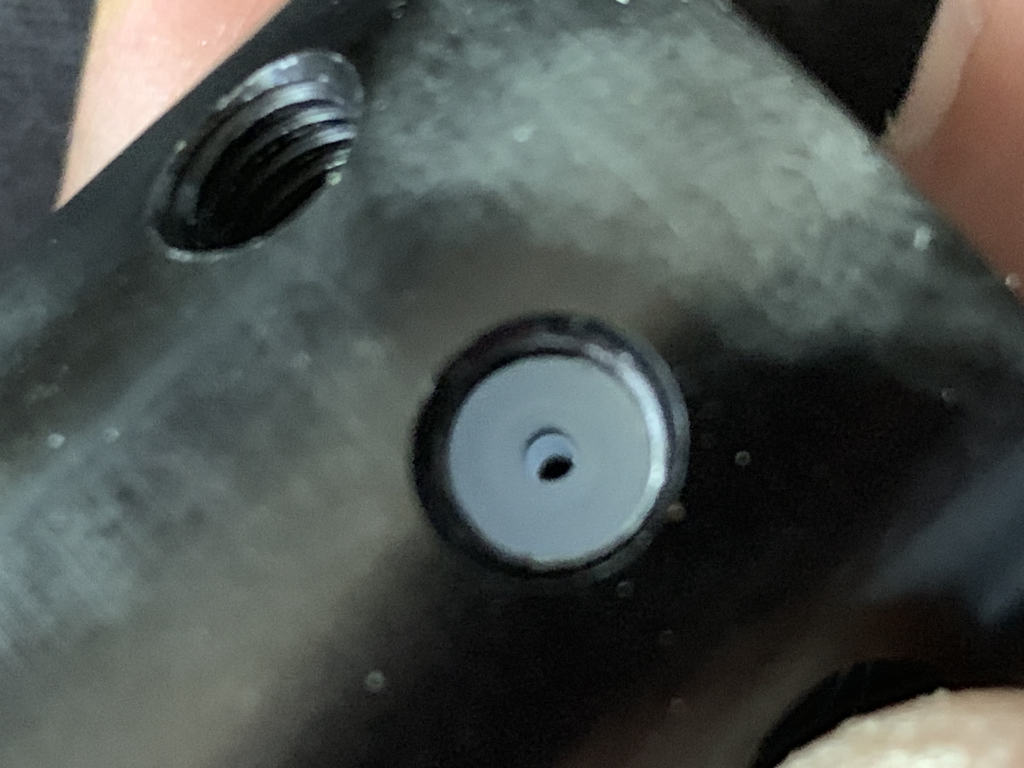
Arducam Pivistation 5 Klarity I2C

I was trying to interface directly with the I2C on the Arducam Pivistation 5 Klarity camera module for… reasons.

Anyway I figured this would just expose the I2C on the IMX283… but it doesn’t seem to. There seems in fact to be another little microcontroller (GD e230f8?) there which uses a different I2C command set. It seems similar to the interface from this camera:

https://github.com/ArduCAM/Arducam-Pivariety-V4L2-Driver/blob/7d49aa22558254cd415ef5bbca458a39ad130dce/patchs/arducam_driver.patch#L38

Anyway… I was able to get some info out of it using a Glasgow Interface Explorer. This note is here so someone else doesn’t waste time wondering why the IMX283 (which I think should respond on 0x1a) is responding on 0x0c on this camera.

The Glasgow commands required are below:

Also, it seems that you can crash the microcontroller pretty easily by doing additional reads?

Pacific Biosciences Accuracy Notes

DateOverallInsertionsDeletionsSubstitutionsRead LengthRef
PacBio RS II~2013~11%“predominantly indel”“predominantly indel”“predominantly indel”Vendor
PacBio RS II2020~13%8%3%1.68%Academic Benchmark
PacBio RS II CLR202012.88%8.04%3.16%1.68%8899Academic Benchmark
PacBio RS II Subread201714.2%5.92%3.01%5.27%Academic Benchmark
PacBio Sequel I CLR201912%Inferred from Vendor Claim
PacBio Sequel II CLR201910%~50KbInferred from Vendor Claim
Revio (Subread)202310%All: 100Kb+?Inferred from Vendor Claim
PacBio RS II CCS20171.720.087%0.34%1.3%1772Academic Benchmark
PacBio Sequel HiFi20220.25%0.1%0.13%0.02%Academic Note
PacBio Sequel II CCS20190.14%Academic Benchmark
PacBio Sequel  II HiFi2019<0.1%20KbVendor Claim
Revio (All HiFi)2023<0.1%16.5KbVendor Claim

Random Notes 5

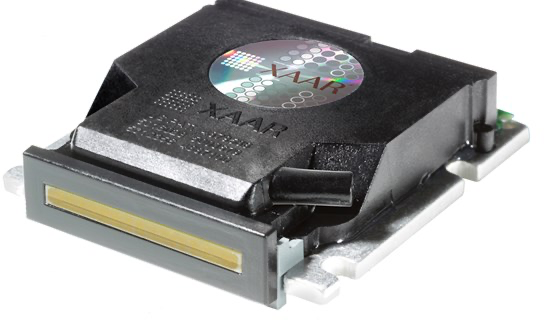
Xaar 128

https://github.com/MatthiasWM/Xaar128

https://github.com/gkyle/xaar128

https://www.xaar.com/en/products/xaar-printheads/xaar-128/

http://ytec3d.com/forum/viewtopic.php?t=47

chinese inkjet info: http://m.6lon.com/sdm/132165/2/cp-1003311/0.html

RNA Bioanalyzer

PaperQuantification pg/ul RNARunPlots
Urine RNA Processing in a Clinical Setting: Comparison of Three Protocols397.5 ng/60 mL (Qubit RNA HS)Agilent 4200 TapeStationRIN: 5.9An external file that holds a picture, illustration, etc. Object name is nihms918280f3b.jpg
Urine RNA Processing in a Clinical Setting: Comparison of Three Protocols397.5 ng/60 mL(Qubit RNA HS)Agilent 4200 TapeStationRIN: 3.3An external file that holds a picture, illustration, etc. Object name is nihms918280f3a.jpg
Deep Sequencing of Urinary RNAs for Bladder Cancer Molecular Diagnostics0.98 ng/mL0.08 ng/mLProcessed within two hours of collectionAgilent 2100 Bioanalyzer, RNA Pico chipsRIN ranged from 2.5 to 9.5Mean: 6.03No plots
Identification of microRNAs in blood and urine as tumour markers for the detection of urinary bladder cancer~2 ng/uL (fig. 1)Several urine RNA isolates showed low RIN values <3No plots
Urinary MicroRNA-Based Diagnostic Model for Central Nervous System Tumors Using Nanowire ScaffoldsQubit microRNA AssayAgilent 2100 BioanalyzerRIN: 81638356162683-129.png

RNA Papers

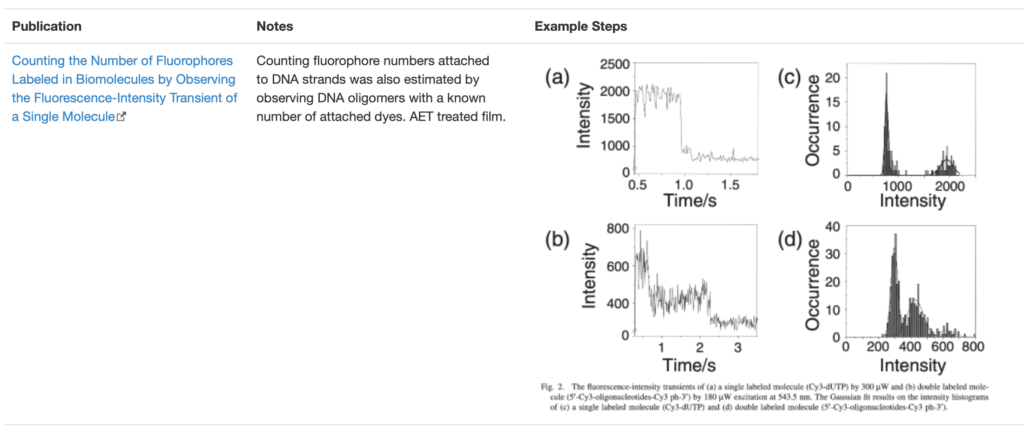
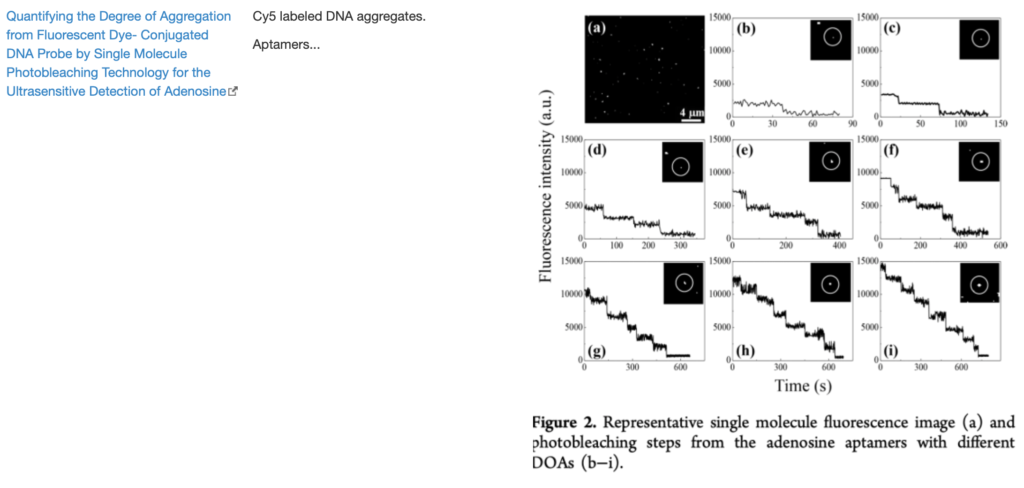
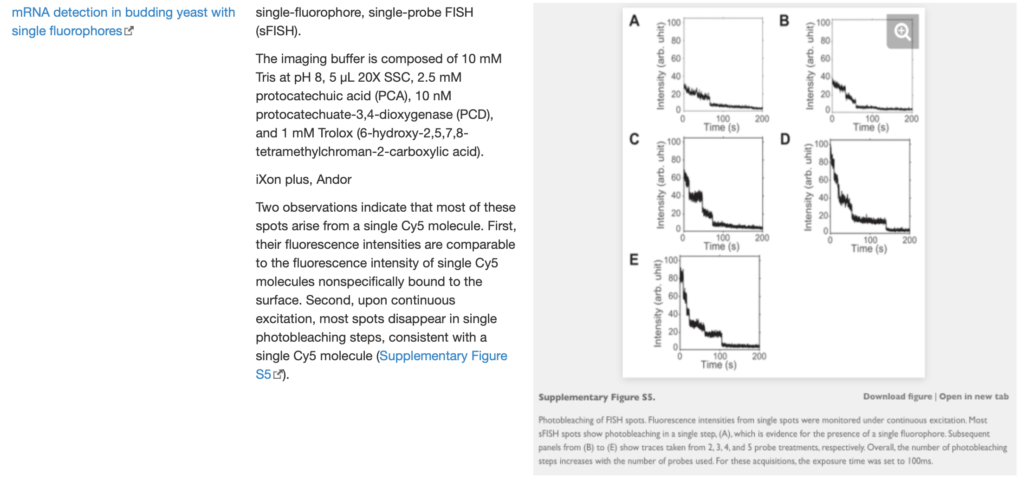
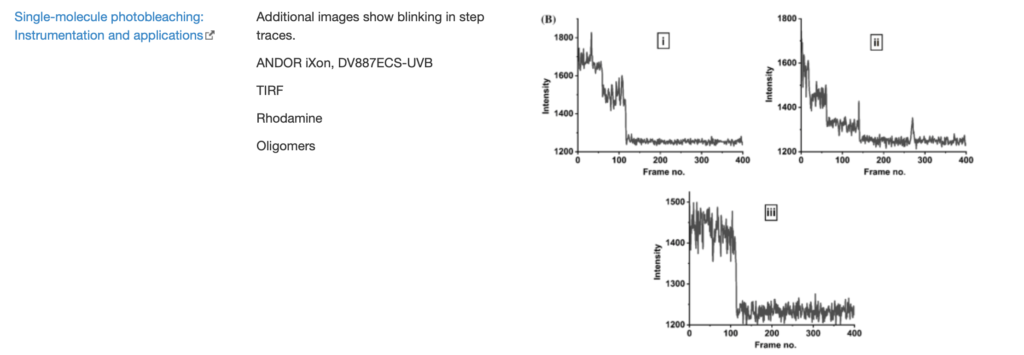
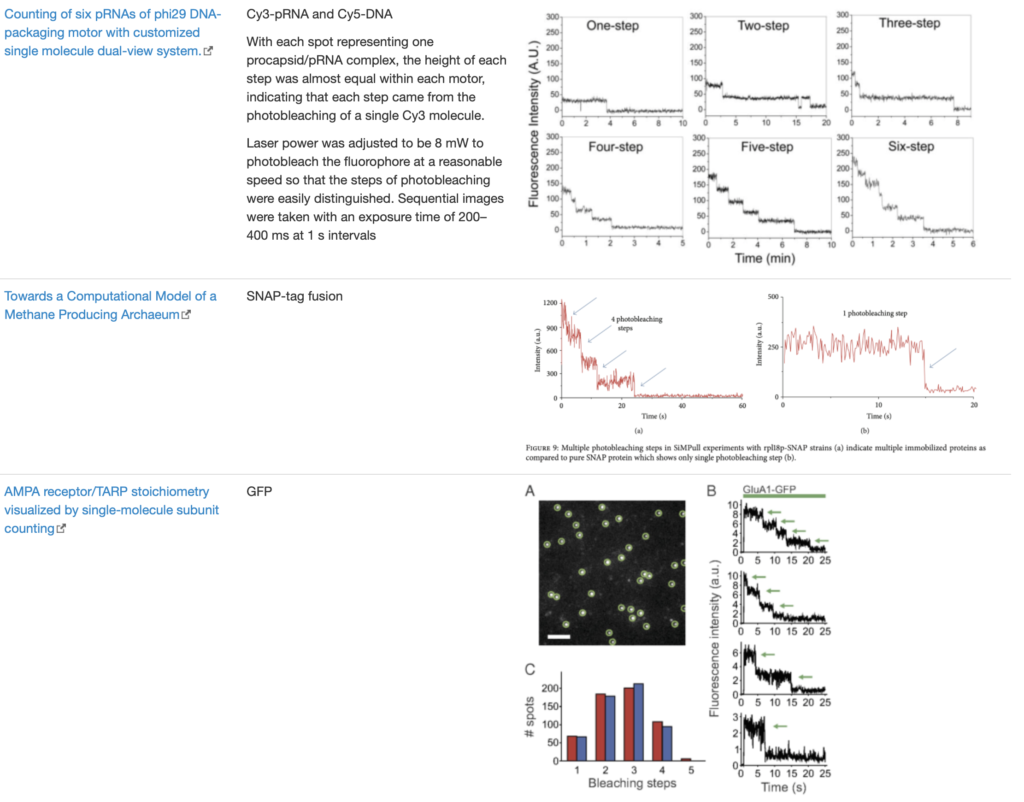
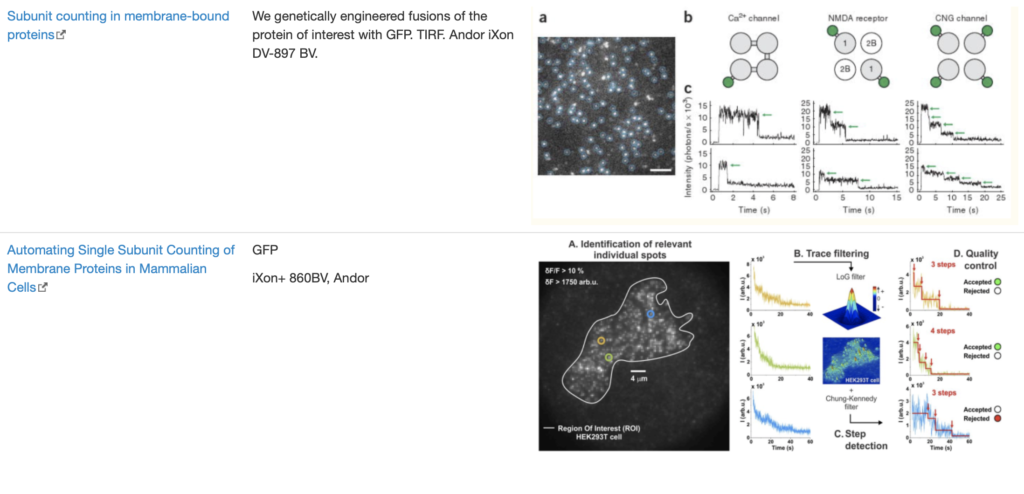
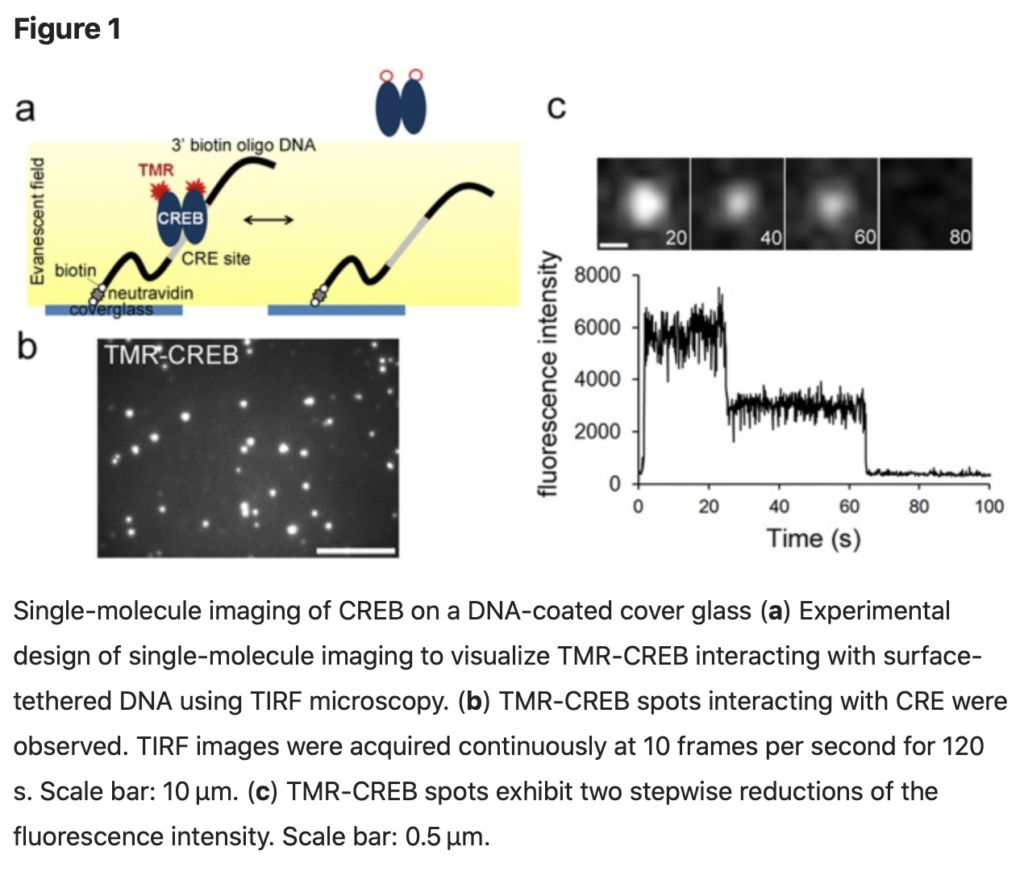
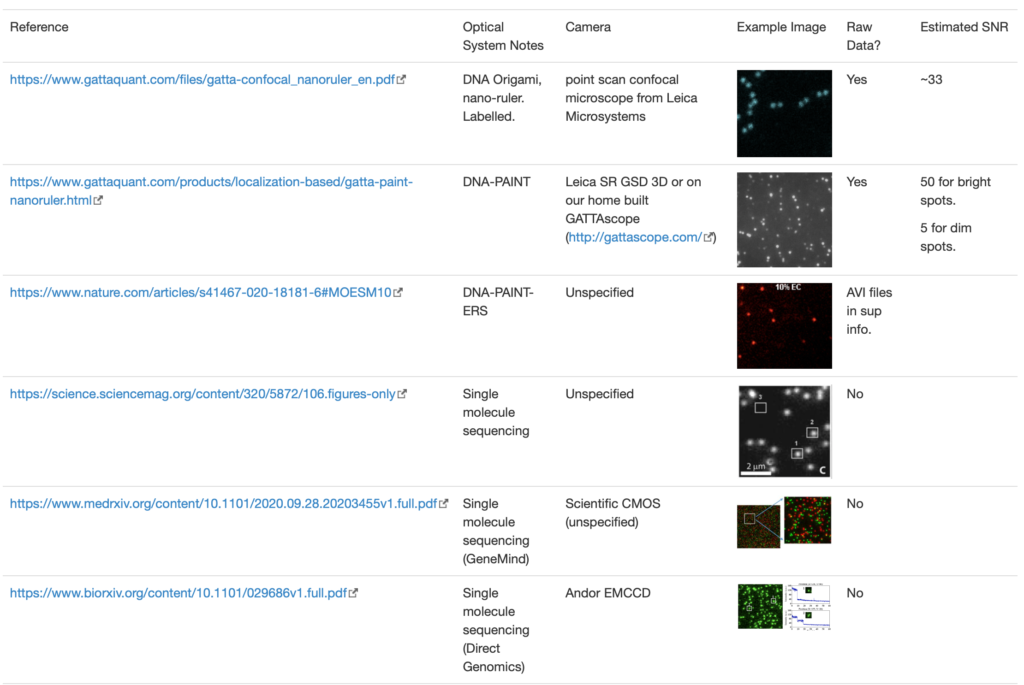
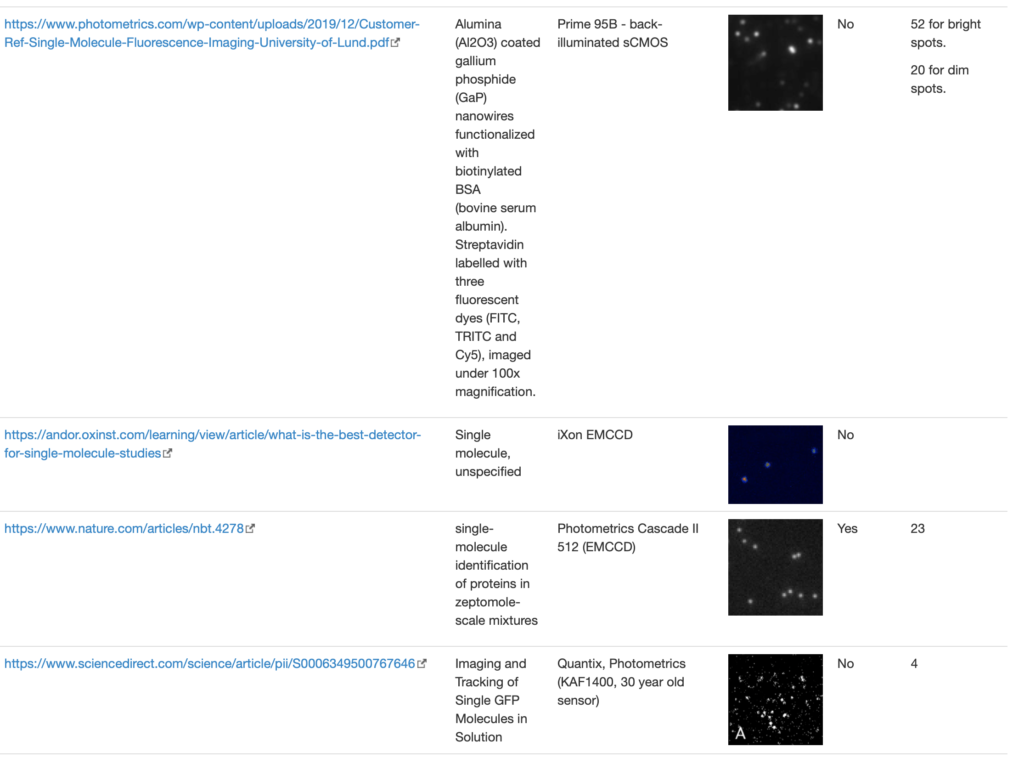
SingleMol Imaging

Solid state Nanopore

Hitachi, making pores with dialectric breakdown, slowing, notes on viscosity to slow etc: https://www.nature.com/articles/srep31324.pdf

Keio University group, optical observation of translocation: https://iopscience.iop.org/article/10.7567/APEX.9.017001/pdf


Amplification/Electronics

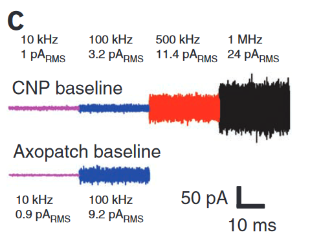
ASIC Design, to go to 1MHz: https://www.nature.com/articles/nmeth.1932

Noise measurements from above:

Instrumentation for Low-Noise High-Bandwidth Nanopore Recording. Engineered Nanopores for Bioanalytical Applications: https://www.sciencedirect.com/science/article/pii/B9781437734737000030

Above has lots of nice protocol information.

Ionic Speed/Current

“If we recall that an Ampere corresponds to a charge flow of 1 Coulomb each second and further, use the fact that the charge on a monovalent ion is approximately 1.6 x 10⁻¹⁹ Coulombs (that is 1 electron or 1 proton charge), then we see that a current of about one pA corresponds to roughly 107 ions passing through the channel each second. This value is in agreement with measurements” http://book.bionumbers.org/how-many-ions-pass-through-an-ion-channel-per-second/

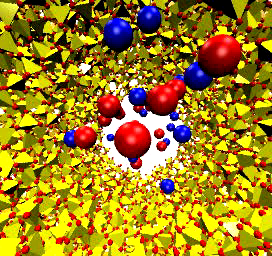
Molecular Dynamics of Ionic Current: https://www.ks.uiuc.edu/Research/silica/IonRect.html

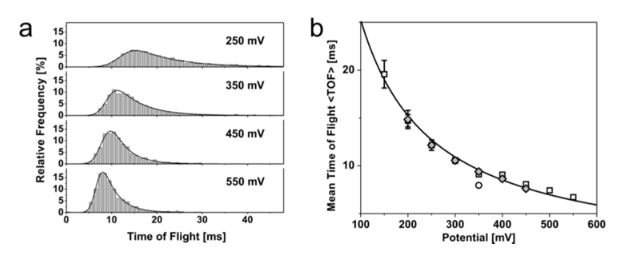
DNA Speed:
From, measures time to translocate two adjacent pores. distance is ~1.5um: https://pubs.acs.org/doi/full/10.1021/nl2030079

Folded/Knotted DNA:

Detection of knotted DNA

https://www.nature.com/articles/nnano.2016.153

https://www.nature.com/articles/s41467-019-12358-4

Folding

https://www.ncbi.nlm.nih.gov/pubmed/20608744

Double stranded Lambda DNA (16um long, 48kb). Translocates in 3 different confirmations. Grabbed at the end. Grabbed in the middle (completely folded), Grabbed near an edge (partly folded). Difference in current levels is ~1nS between each confirmation (200pA). 22nm pore is used. Translocation time ~3ms.

https://pubs.acs.org/doi/pdf/10.1021/acs.nanolett.8b04715

Hairpins, P2000 pulled quartz nano-pipette. Using hairpins to encode DNA 8bp and 16bp hairpins.

DNA Folds for data storage by Ulrich: https://www.ncbi.nlm.nih.gov/pubmed/30585490


Unknown rotary valve (from Affy fluidics)